CEDI Demineralized Water System: High Performance, Low OPEX
The Challenge: Rising Costs and Operational Instability
In industrial environments where high-purity water is critical, conventional mixed bed ion exchange systems have long been the standard. However, their limitations become increasingly evident under real operating conditions—especially in remote and demanding environments.
Our client was facing a combination of challenges:
Escalating chemical costs (acid and caustic for regeneration), further amplified by regional supply chain disruptions
Inconsistent water quality, with fluctuations in conductivity and output
Operational dependency on skilled labor, increasing the risk of human error
Frequent downtime due to regeneration cycles and maintenance
A need for a robust, reliable solution capable of operating in a remote location
The situation was clear: the existing system was costly, inefficient, and operationally fragile.
The Solution: TRI-DEMIN1200 Containerized EDI System
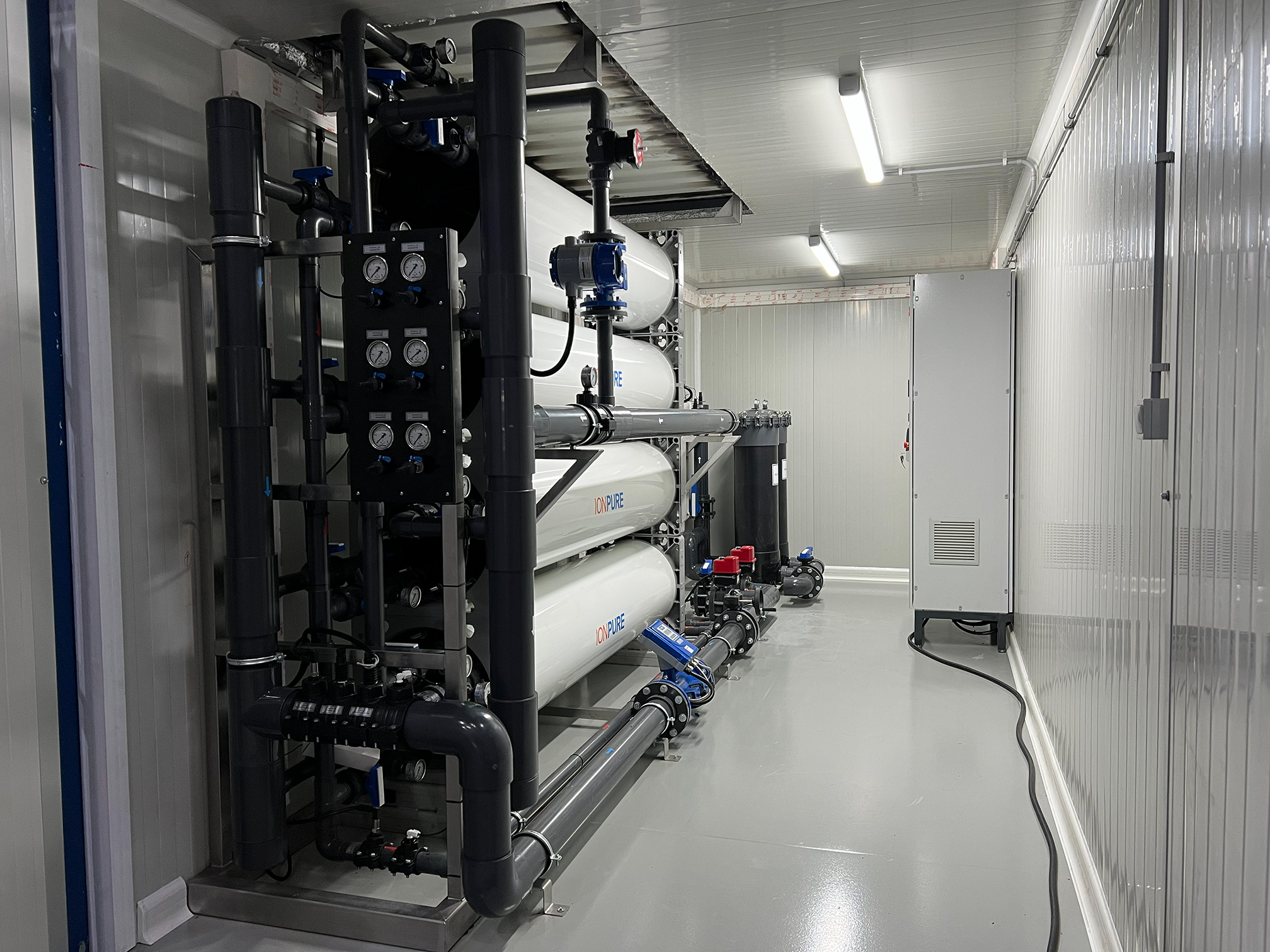
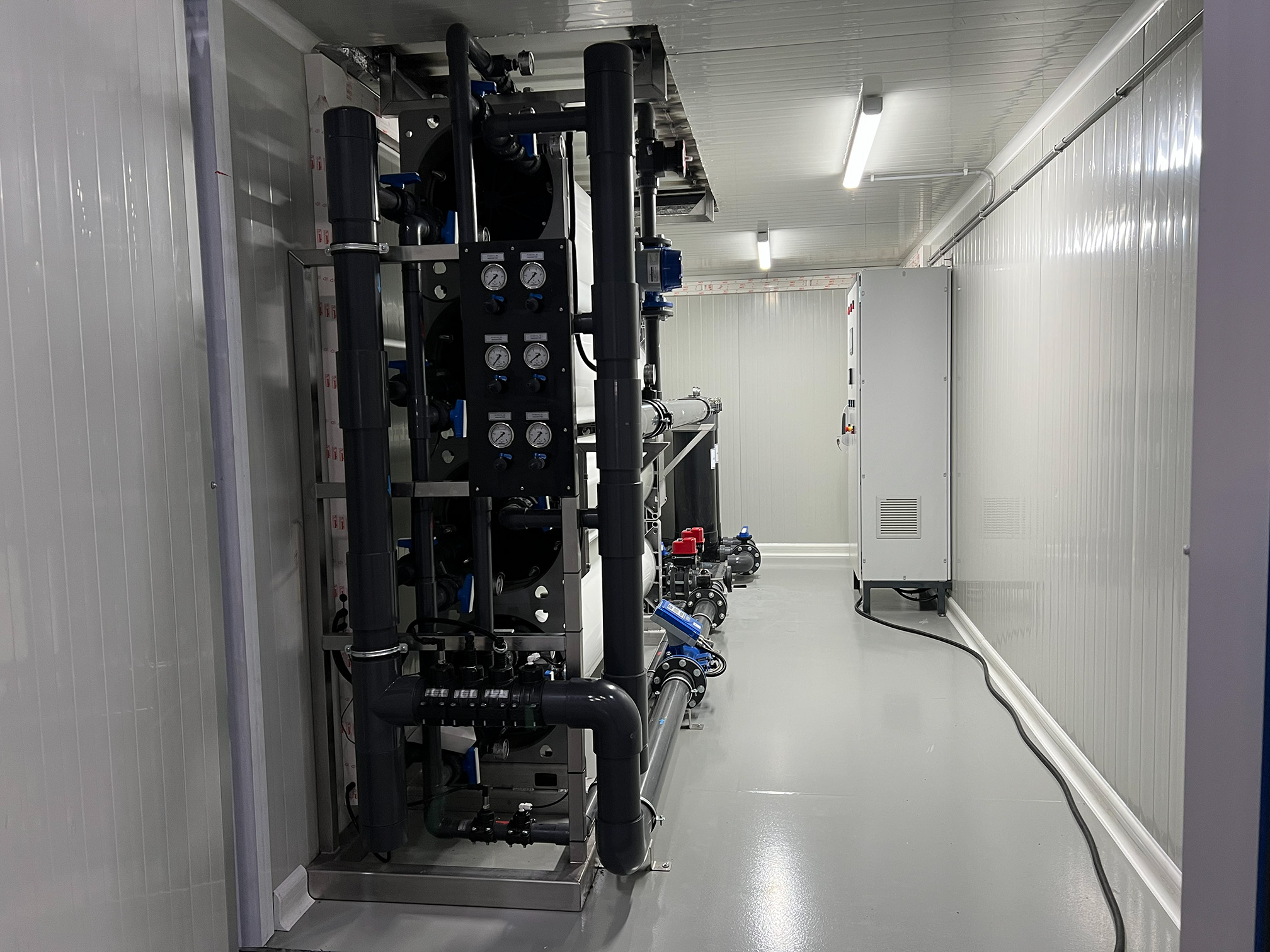
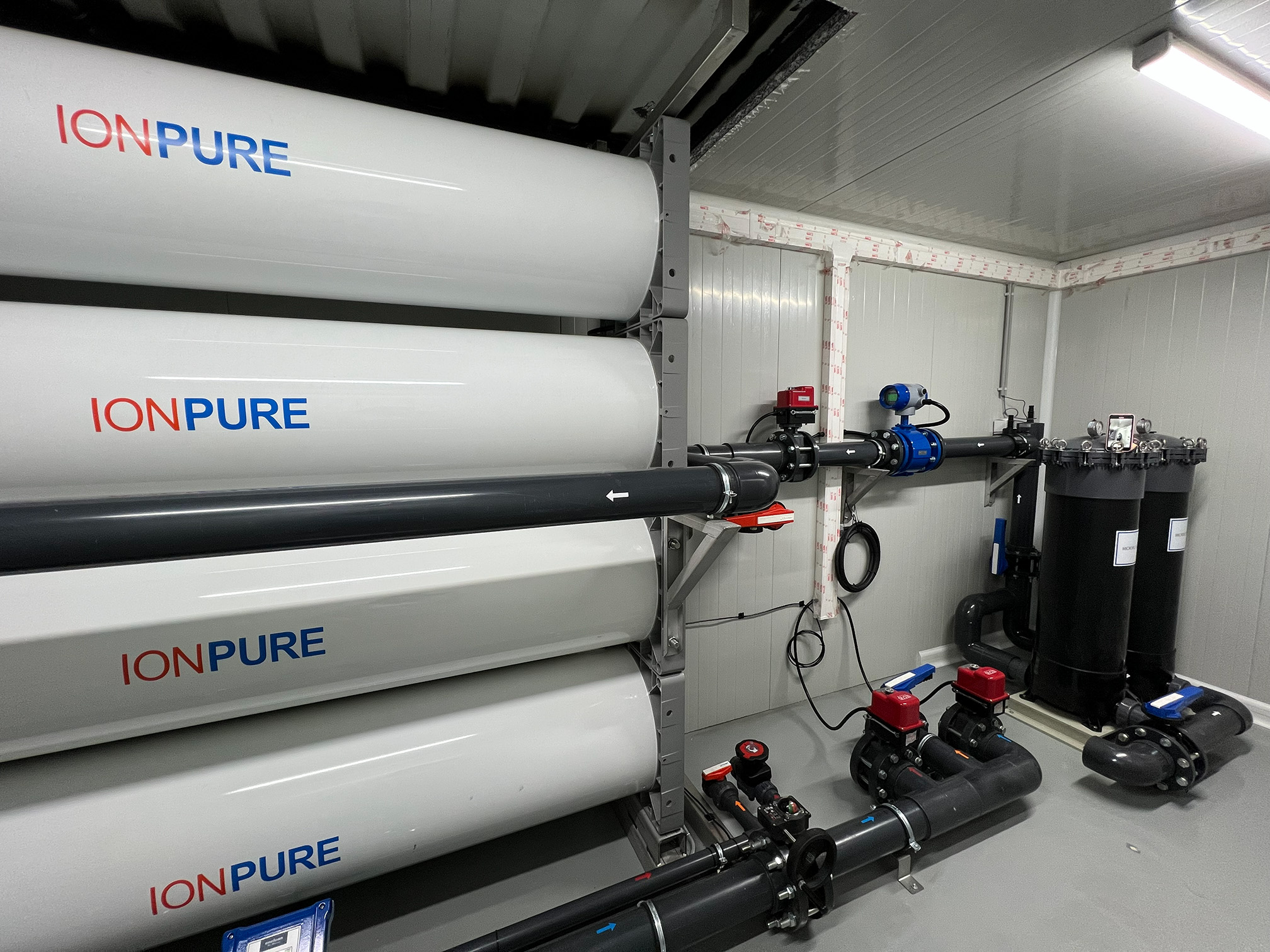
To address these challenges, TRIWA designed, supplied, and deployed the TRI-DEMIN1200 — a fully containerized Continuous Electrodeionization (CEDI) system.
Key Performance Specifications
Capacity: 50 m³/h
Product Quality: < 0.015 µS/cm conductivity
Operation: Fully automatic
Configuration: Plug-and-play containerized unit
Designed for Reliability in Real-World Conditions
Unlike conventional systems, TRI-DEMIN1200 was engineered with operational continuity and durability at its core:
Isolation valves on each EDI module → Ensures continued operation even if one module is offline
Advanced instrumentation package → High-sensitivity conductivity meters for precise monitoring → Ultrasonic flow meters on permeate lines → Electromagnetic flow meters on feed and reject
Motorized valves and automated controls → Minimize operator intervention → Reduce human error, a key concern for the client
Fully containerized design → Simplified installation with clearly defined hydraulic and electrical termination points → Ideal for remote and fast-track deployment scenarios
Why CEDI Over Mixed Bed Resin?
The shift from mixed bed to CEDI technology was not just an upgrade — it was a fundamental operational transformation.
1. Elimination of Chemical Dependency
CEDI removes the need for acid and caustic regeneration, resulting in:
Lower operating costs
Safer operations
Reduced logistics and supply chain risks
2. Continuous Operation
Unlike mixed bed systems that require periodic shutdowns for regeneration:
CEDI operates continuously
Downtime is virtually eliminated
Daily production capacity increases significantly
3. Consistent Water Quality
CEDI provides:
Stable conductivity levels (<0.015 µS/cm)
Reduced variability compared to batch regeneration systems
4. Reduced Human Error
With full automation:
Operator dependency is minimized
System performance becomes predictable and repeatable
The Result: Rapid ROI and Operational Stability
By transitioning to TRI-DEMIN1200, the client achieved:
Return on Investment (ROI): ~15 months (compared to ongoing mixed bed operational costs)
Significant reduction in OPEX → No chemical consumption → Lower maintenance requirements
Near-zero downtime → Continuous production of demineralized water
Improved operational confidence → Reliable performance even in a remote, challenging environment
A Smarter Approach to Demineralized Water
The success of this project highlights a broader shift in industrial water treatment:
Moving away from chemically intensive, operator-dependent systems Toward automated, modular, and sustainable technologies
With TRI-DEMIN1200, TRIWA delivers a solution that is not only technically superior, but also commercially optimized for modern industrial needs.
Let’s Talk
If your facility is still relying on conventional mixed bed systems and facing rising costs or operational challenges, it may be time to rethink your approach.